Over 20 years ago, I was fortunate to write an article with Richard Merelman, a renowned political scientist at UW-Madison who wrote extensively on culture and politics. I was in graduate school in Madison at the time and interested in Professor Merelman’s work on race and democracy, and we had a discussion one day about a recent (at the time) article from Robert Dahl called “A Democratic Paradox?” In that article, Dahl “identifies a ‘democratic paradox’ in which citizens have low faith in democratic institutions but high esteem for democratic principles and ideals. Dahl asserts that the paradox is resolved if citizens principally perceive democracy in terms of political rights (i.e., freedom of speech and assembly) and not political responsibilities (i.e., regular voting)” [quoting our own summary of that piece]. We were intrigued with the idea but wondered also if Americans simply defined democracy in different ways than most might think. Perhaps, we thought, Americans had come to think of the free market (and capitalism more broadly) as a component of democratic life, in effect fusing political and economic freedom into a democratic whole. If so, or if at least some did this, than Americans could consider themselves (small-d) democrats every time they bought something.
(As an aside, many might recall President Bush’s suggestion after 9/11. He said, “Get down to Disney World in Florida. Take your families and enjoy life, the way we want it to be enjoyed.” This wasn’t exactly a “Ask not what your country can do for you” moment, and he was widely criticized. But his conceptualization seemed to match our hypothesis.)
We wanted to test this idea, and so we designed a short survey that asked people about their ideas of democracy. Designing the survey questions was a fun exercise (how do you ask people what they think democracy is?), but we didn’t have any money to field it. So we, instead, recalibrated our expectations and decided to field a pilot survey in the local community. We went to union meeting halls and churches and distributed the surveys in several locations, adding also a slate of Madison undergraduates in some political science classes. The goal was to get a cross-section of old and young, liberal and conservative, knowing that our data were not representative. We termed our hypothesis (capitalism as democracy) “markodemocracy” and we labeled our data collection a “reconnaissance.” It was a blast.
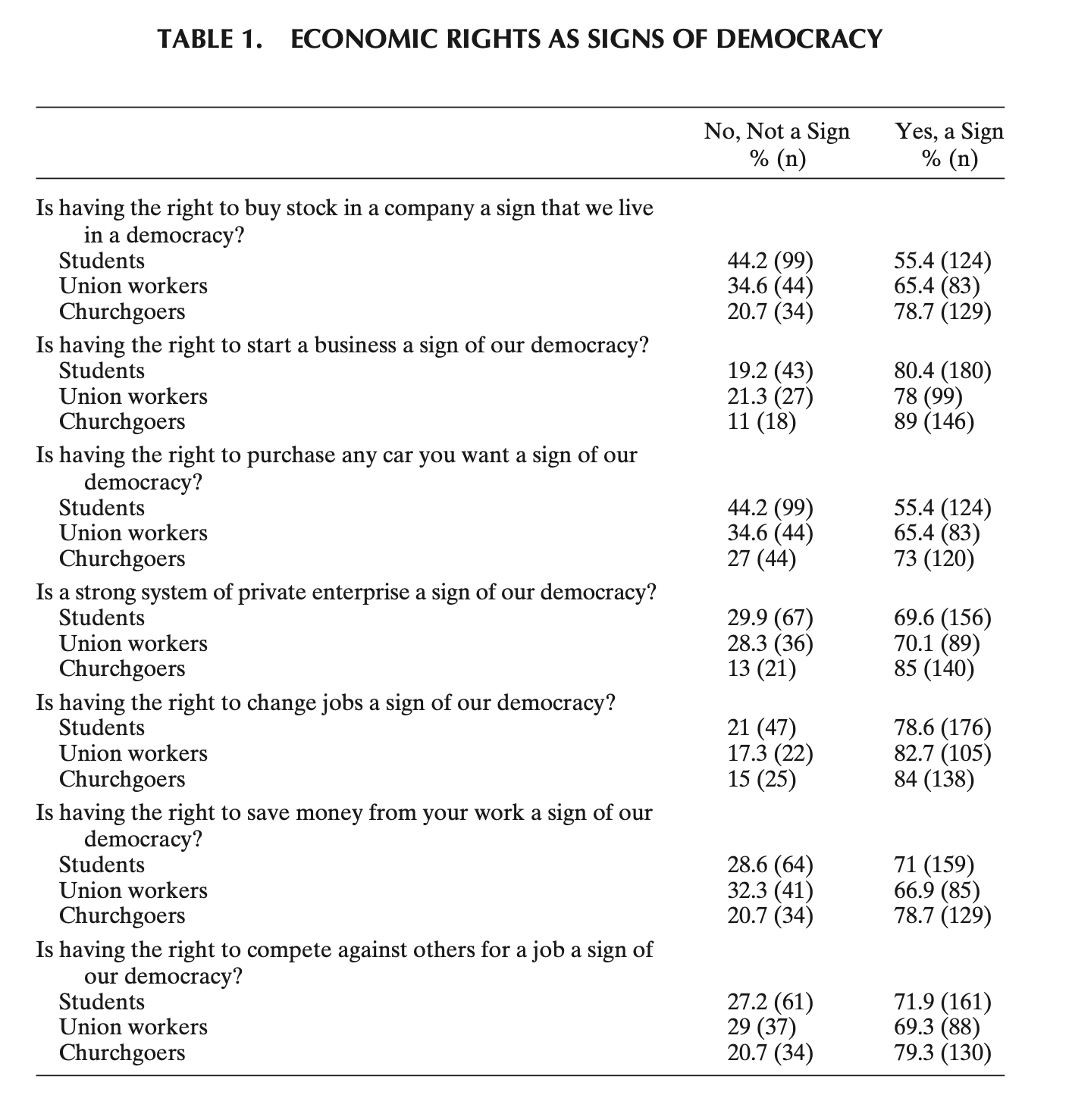
We found several things that affirmed our expectations. For example, here are some results from our first slate of questions, where we queried respondents whether economic rights were understood as democratic rights. Majorities said yes across the board. For example, is having the right to purchase any car you want a sign of our democracy? 55 percent of students said yes; 65 percent of union workers; and 73 percent of churchgoers.
In 2019, I put together a survey that relied on a Qualtrics sample. This was for a different project, and the sample was not a representative one, but it was far wider in geographic scope than our Madison sample. For fun, I put much of the markodemocracy battery on the survey. About 1,000 people participated in the study, but random halfs of the sample were asked sections of the markodemocracy questions. First, consider the results on many of the above questions. Here is what the 2019 sample said.
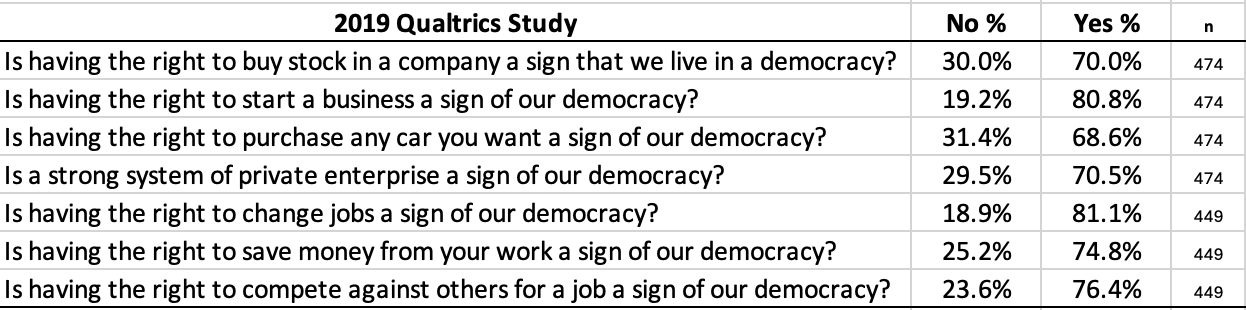
By and large, there is a lot of consistency in the responses between 2004 and 2019. Significant shares of respondents considered the listed economic acts to be “signs we live in a democracy.”
Another set of questions asked whether “government” or “business” were better at delivering what we considered to be consensus democratic goals (e.g., treating people fairly, protecting individual rights, and so on). Here is some of what we found:
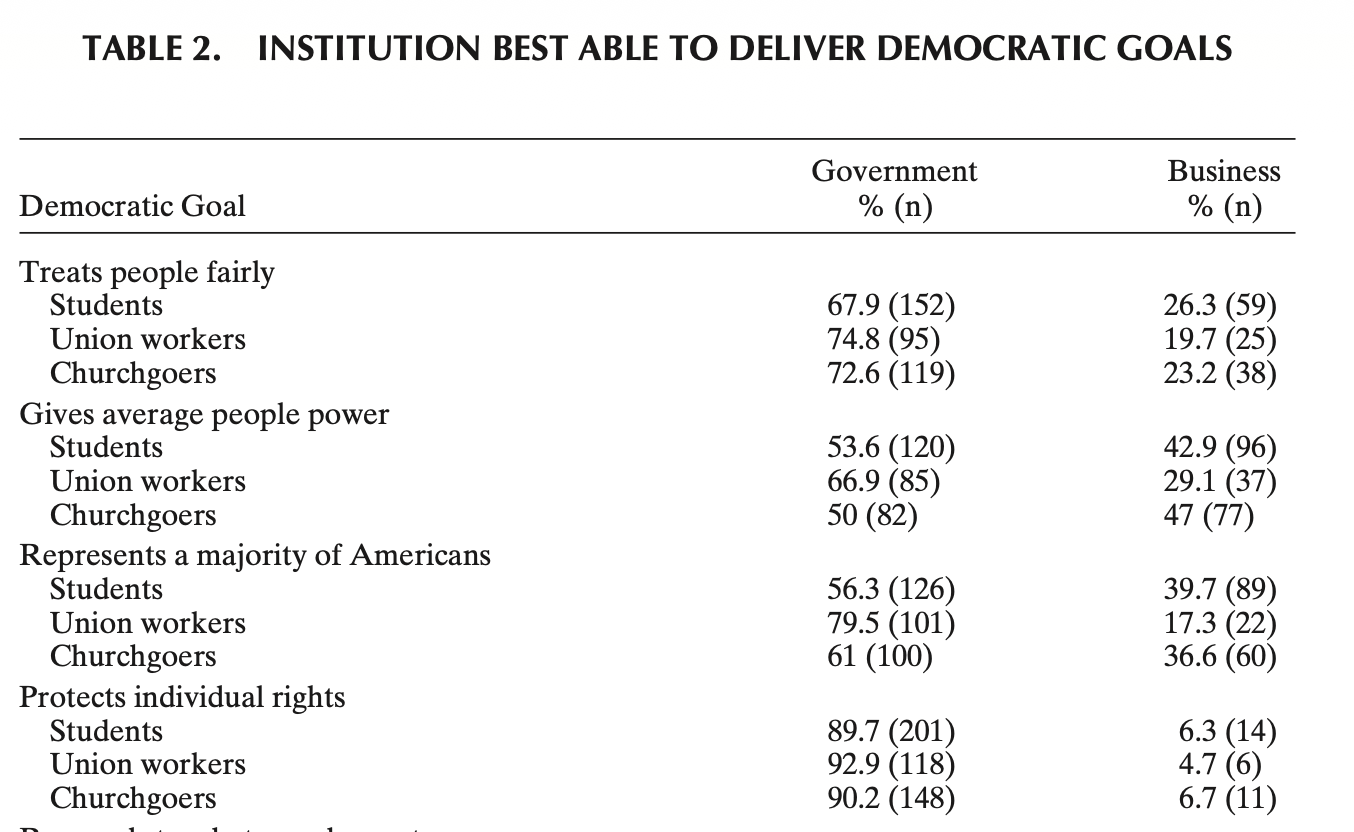
Here the numbers were lower for business than government, but we didn’t expect majorities to think businesses were better than government at delivering politically democratic outcomes. We were looking for what we called “consequential amounts” as we scaled up the questions. That’s a slippery standard, to be sure, but we argued that the data cleared the bar. 26 percent of students said “business” was better than “government” at treating people fairly, for example.
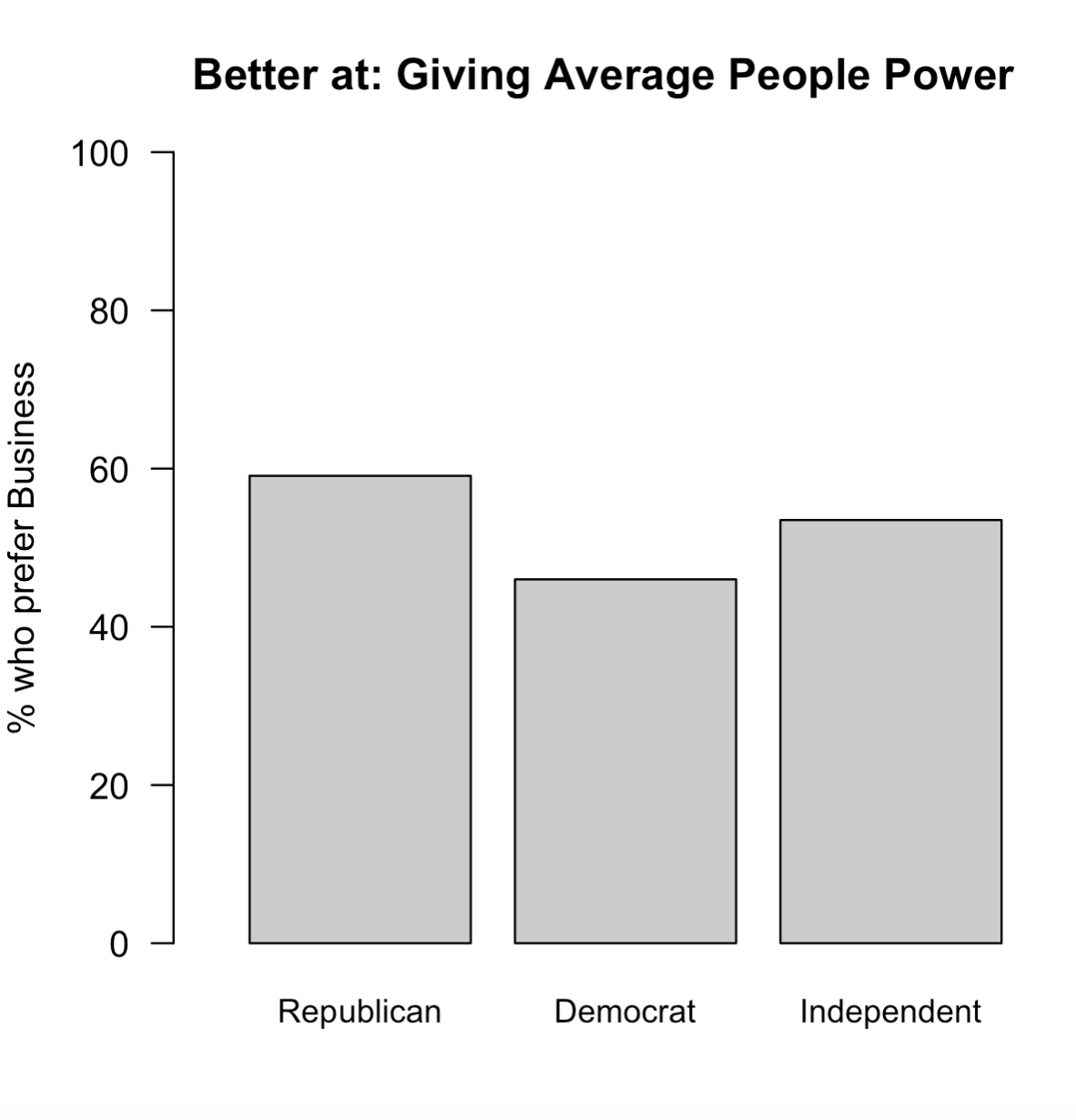
These results persisted to 2019. Here is one finding, asking about whether government or business is better at giving average people power. I didn’t limit the Qualtrics survey to students, union workers, or churchgoers, so I break out the results by party affiliation. In 2019, the results showed higher preferences for business than government on this question. Majorities of Republicans and Independents preferred business, as did over 40 percent of Democrats. In line with our 2004 results, markodemocratic preferences appear across a wide swath of respondents.
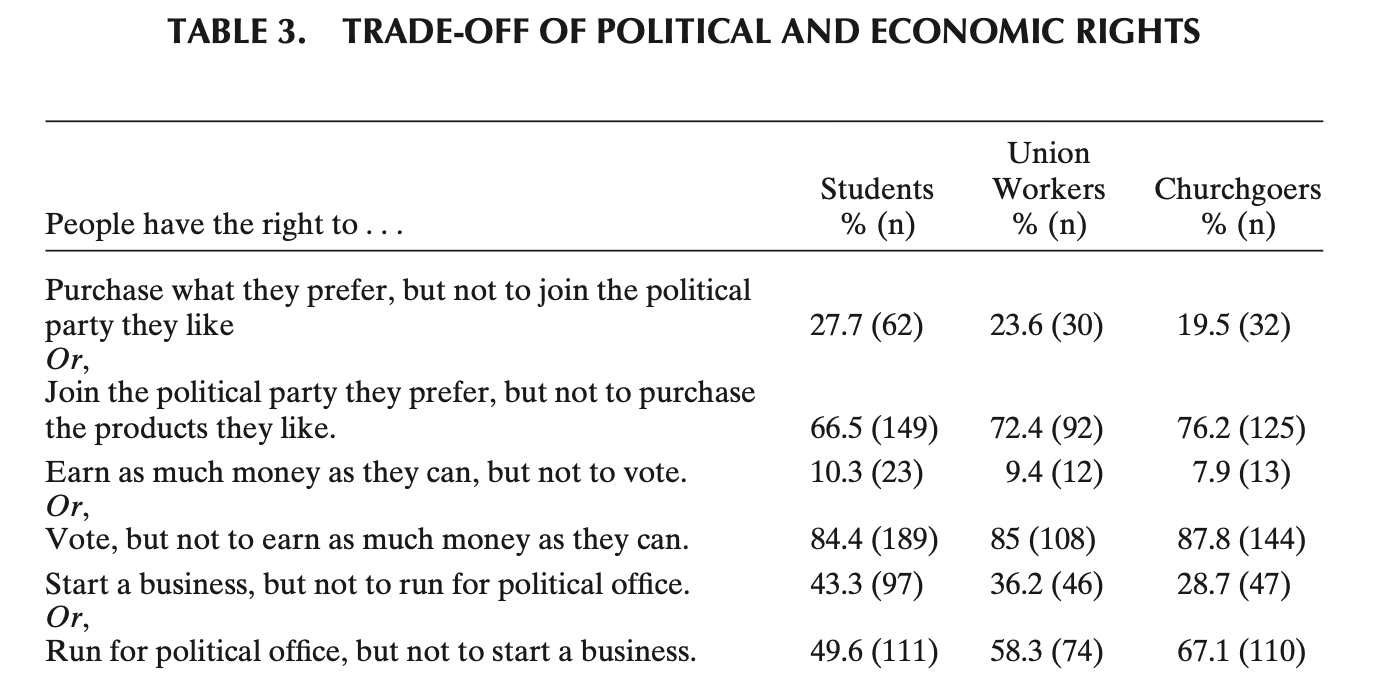
One additional test asked respondents to pick from a series of trade-offs. We wanted to know if “The United States is more democratic when people have the right” to act economically in one way but not politically in a different way; or vice versa. Some of the results from the published piece are below. Respondents were committed to preserving the vote, but many respondents were willing to trade away joining a political party and running for office in exchange for buying what they wanted and starting a business. (Table 3 has more trade-offs than shown below. I decided to share just a selection here.). These are admittedly very hypothetical, but they tap into latent preferences for economic rights over political ones.
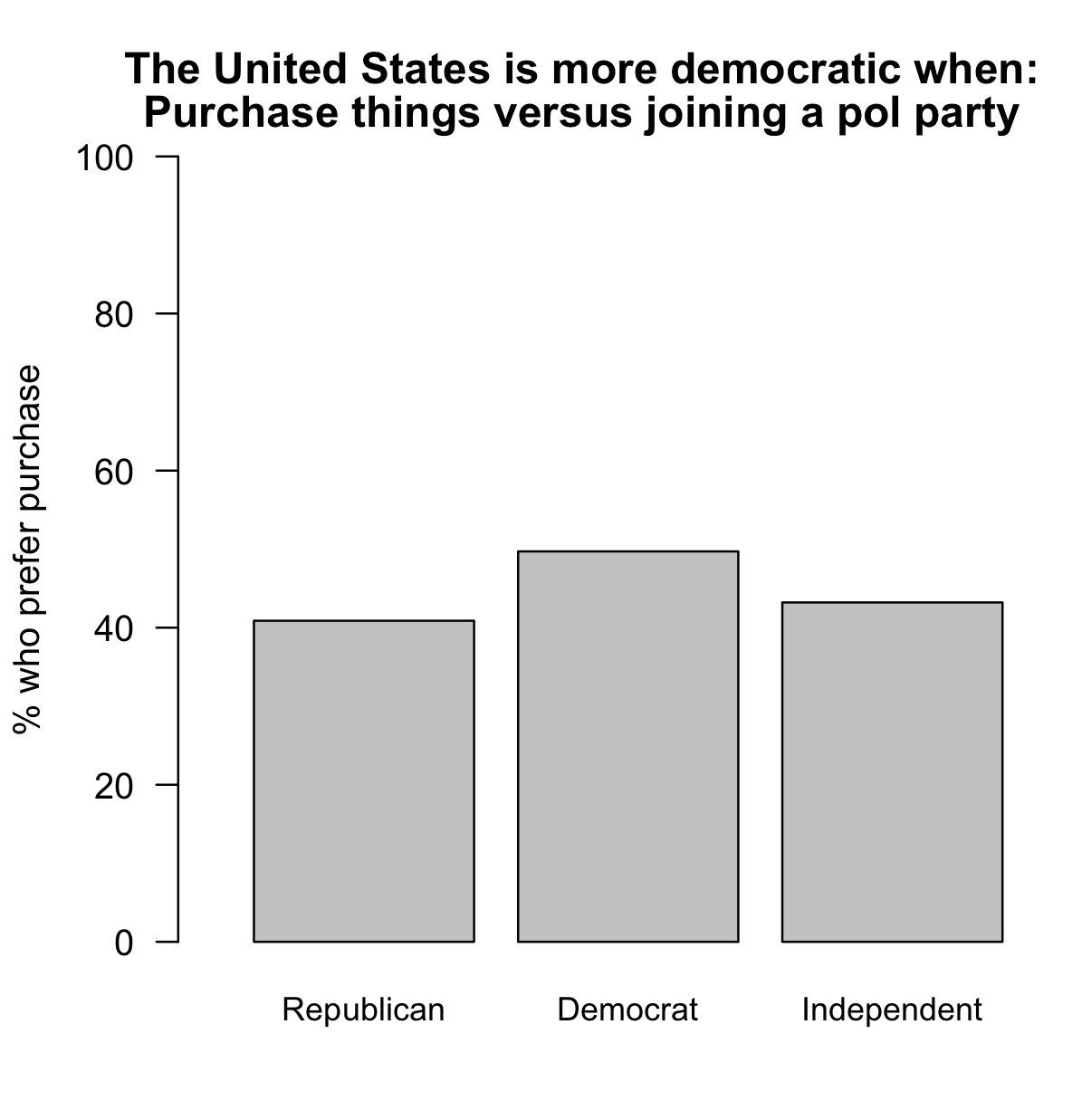
In the 2019 study, the results were largely replicated. Here’s the update on purchasing things versus joining political parties. Indeed, higher percentages of respondents in the updated data would preserve the right to buy things (even Democrats!) over the right to join a political party. Perhaps the vitriol and polarization of the last 20+ years has de-valued this democratic act.
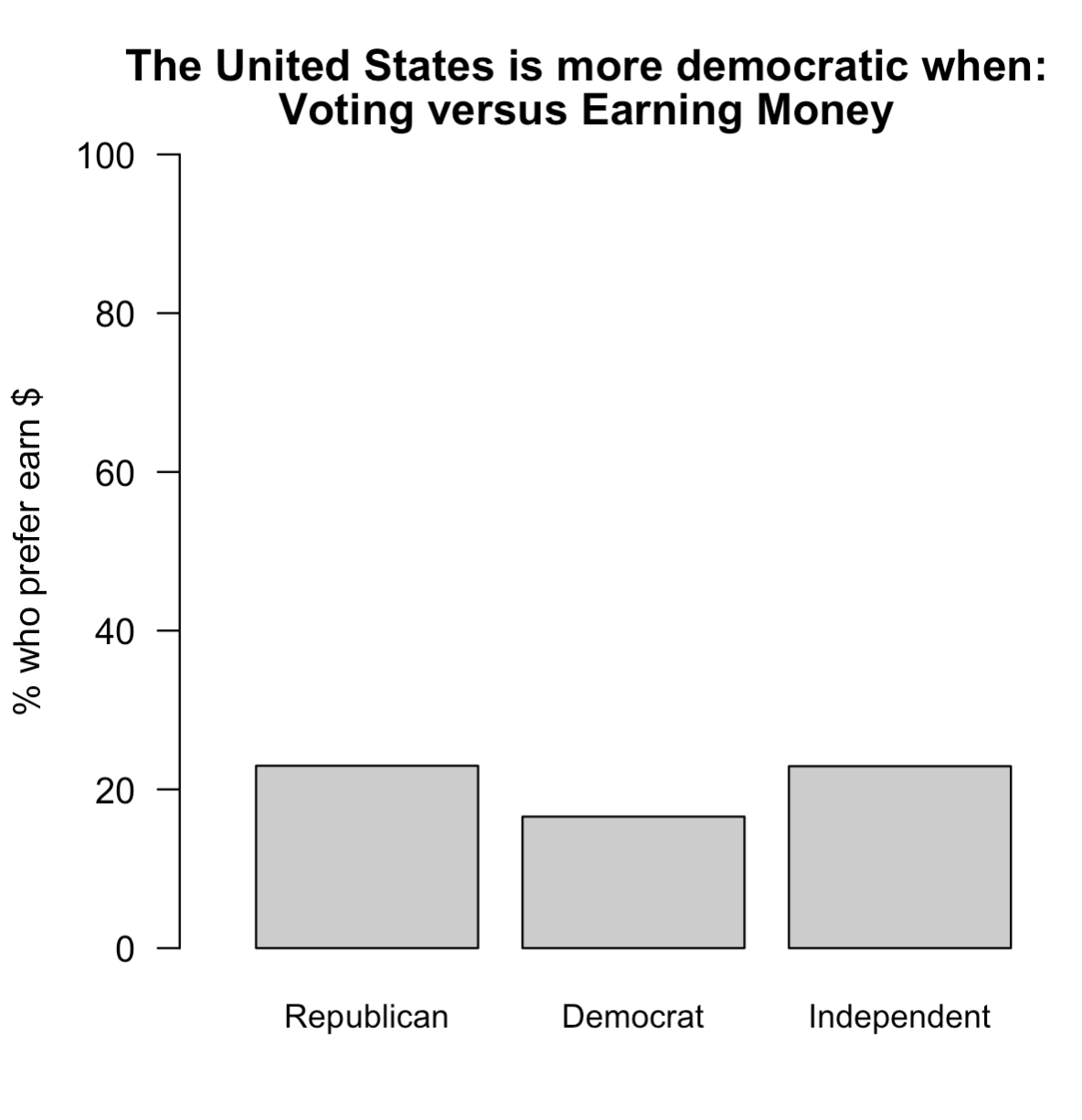
In contrast, and thank goodness, the right to vote remains largely sacrosanct, though 1 in 5 Republicans and Independents suggest they would rather earn money. Here, too, the results were more markodemocratic than in 2004.
What does this all mean? There is a lot of talk today about democratic back-sliding, and about threats to democratic norms and institutions. These concerns are rightly held, and some scholars have looked to quantify how much Americans today continue to value these institutions and norms. How much are people willing to trade away political democratic rights for partisan power, for example? Would, for instance, Republicans mind if Donald Trump ran for a third term? That would be a constitutional violation, but would allow a political hero to remain in power.
Our contribution to this debate moves in a slightly different direction. If Americans see free market rights as democratic, perhaps they are willing to permit scaling back on political rights so long as economic ones are preserved? After all, we are bombarded today with ad campaigns that link patriotic images with market choices. For example:
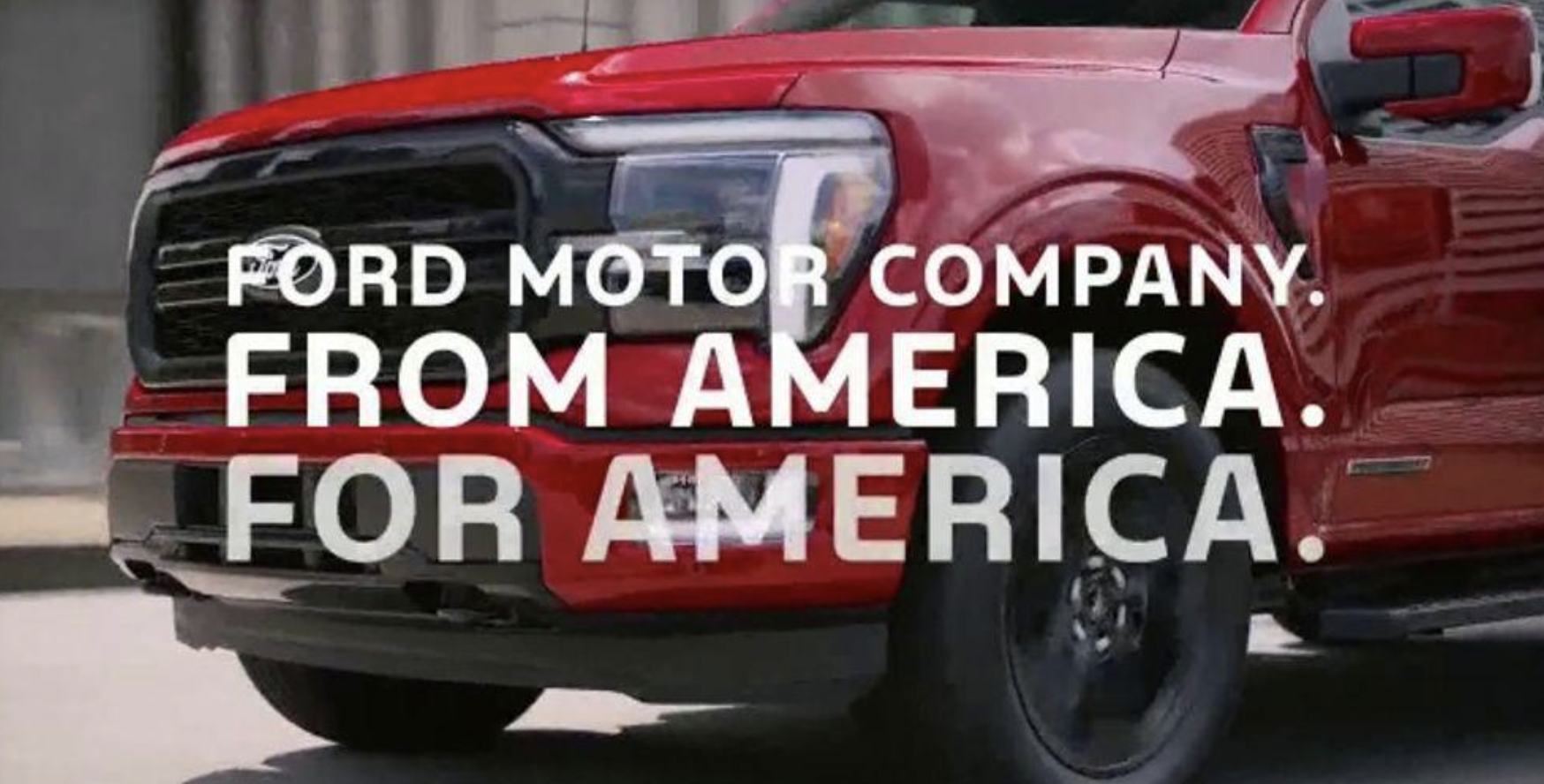
Maybe some Americans have grown frustrated with partisan bickering and legislative gridlock. But they remain “democrats” in their own eyes whenever they buy a car, purchase stock, or change jobs. Normatively, this is concerning. Definitionally it is inaccurate. But from the perspective of the average American, maybe it is one way to remain committed to the broader American project while also watching our political system crack under the pressure.

